Part II
A member's first month
Mr. Bansal is a junior at a Delhi chambers. Adv. Rhea Mehra, a member, introduces him. Every screen he sees, in order.
The Reporter. A brand and a product, shown end to end.
Executive review · September 2026 · every screen is a proposal; nothing is shipped
Preceda is an old-school law reporter, not an AI product. Premium because it is admitted by introduction. Designed for the advocate who has been burned by an AI that invented a citation.
Built for the practising advocate who has been burned by an AI that invented a citation. What that person values, in order: being right in court, time, standing among peers, discretion.
The bound law report: buckram, gilt spine, a citation that is permanent and checkable.
A page that could be shelved and cited in ten years.
Chambers: wood, paper, the file open on the desk. No noise, no sparkle, no chat bubble.
You are here because someone staked their name on you.
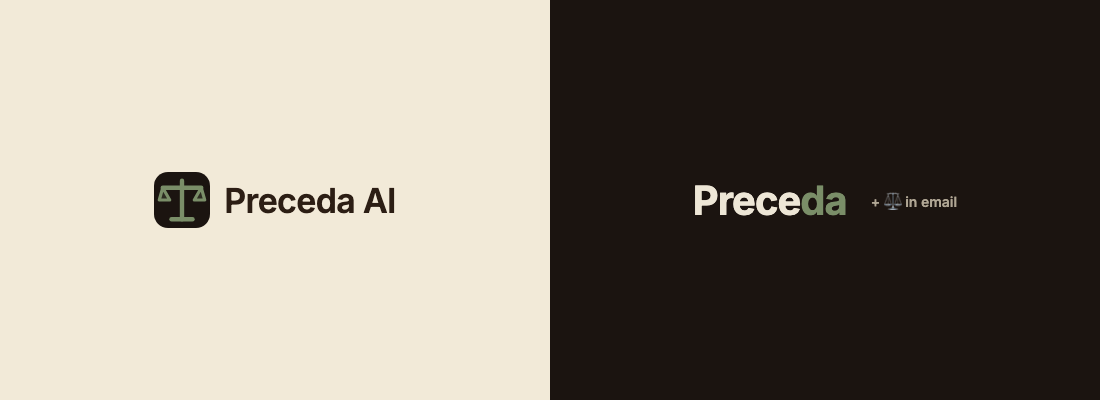
"AI" leaves the name. The scales, the citation-graph tile and the emoji are replaced by one seal, which is also the favicon and the wax seal on the invitation.
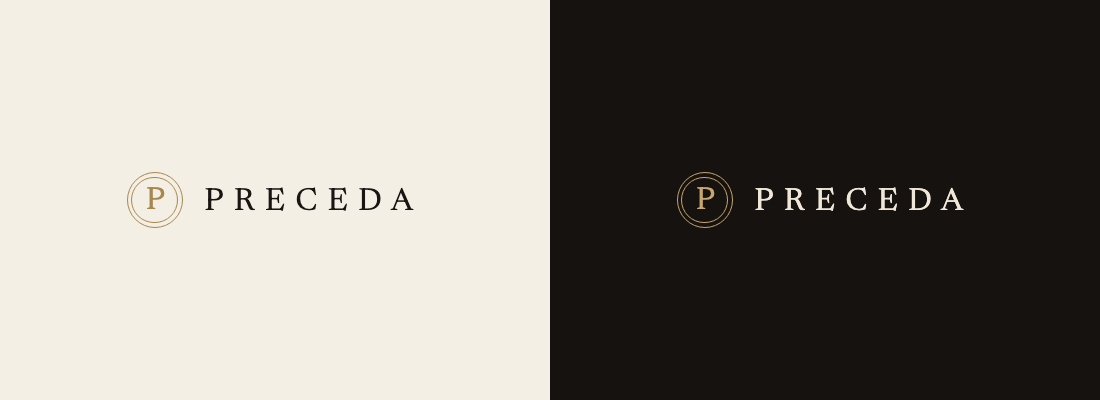
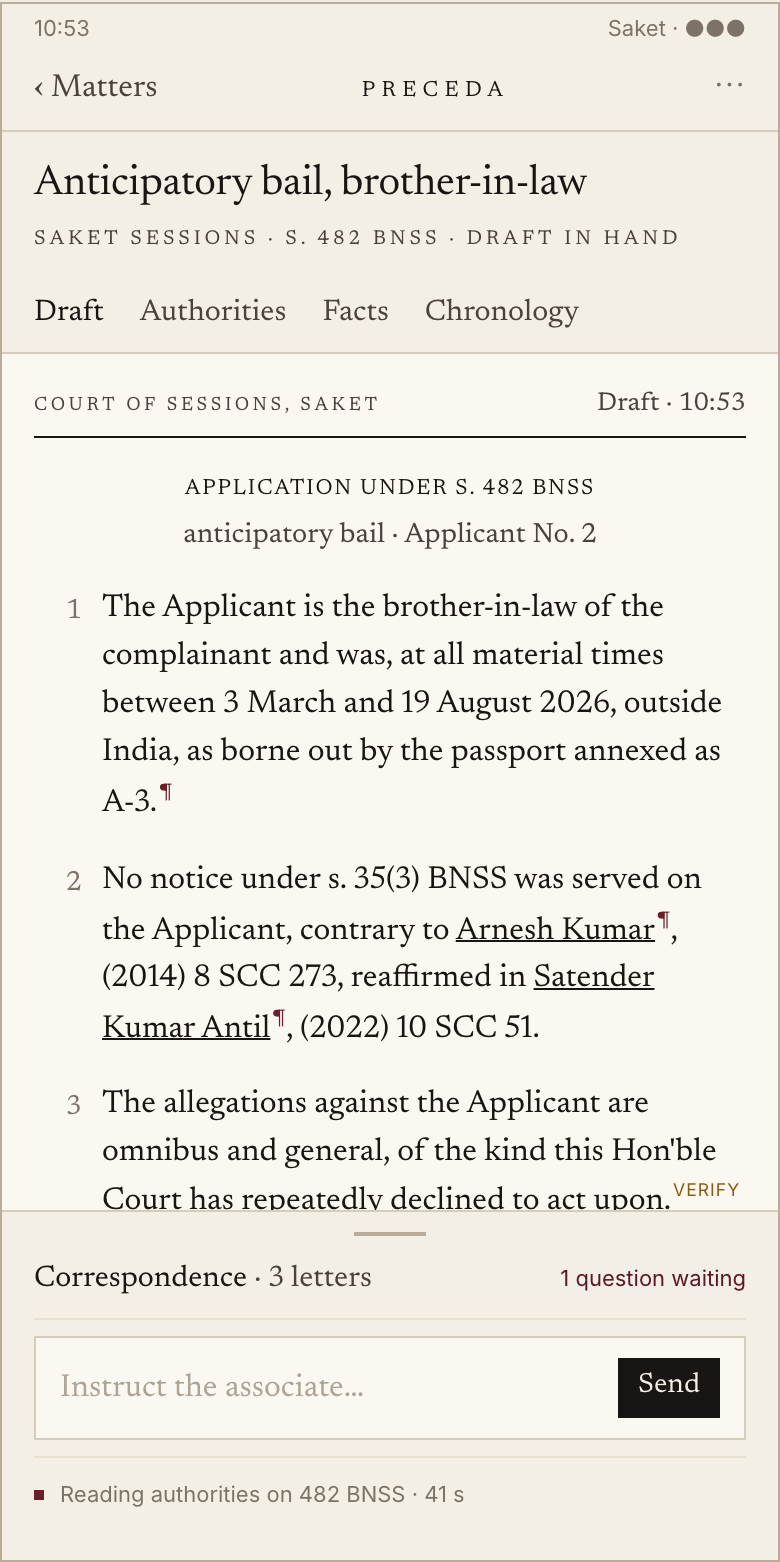
Oxblood is the only accent (agreed). Two lighting conditions, Paper and Lamp (agreed). Verification is typographic: an oxblood ¶ after a verified citation, a marginal VERIFY where the corpus holds no authority, a strike-through for a phantom.
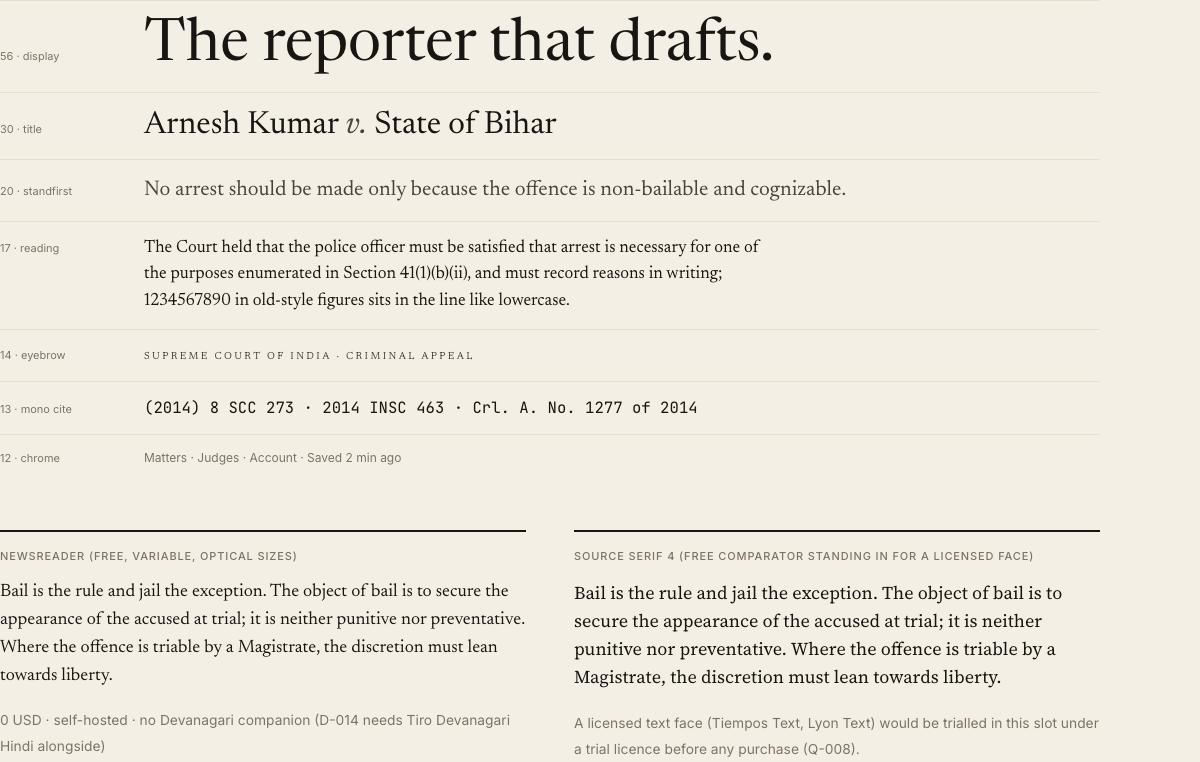
Shown in Newsreader (free, self-hosted). A licensed text face is the alternative; the specimen renders both side by side. Whatever is chosen must have a Devanagari companion for Hindi later (agreed).
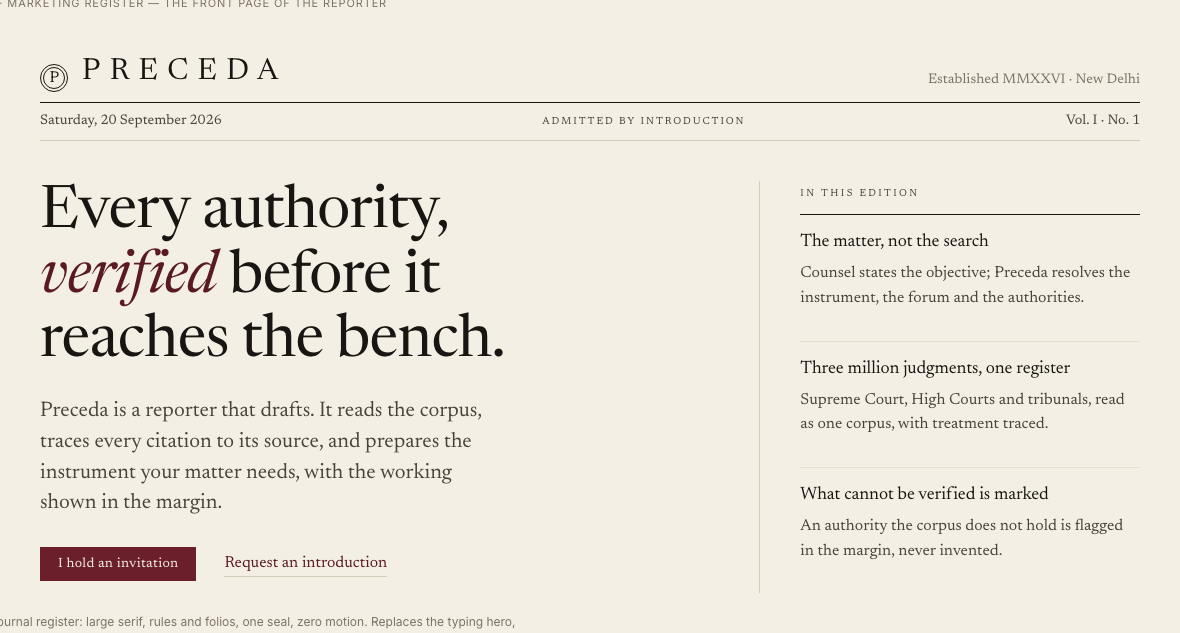
Large serif, rules, folios, one seal, zero motion. One idea per screen.
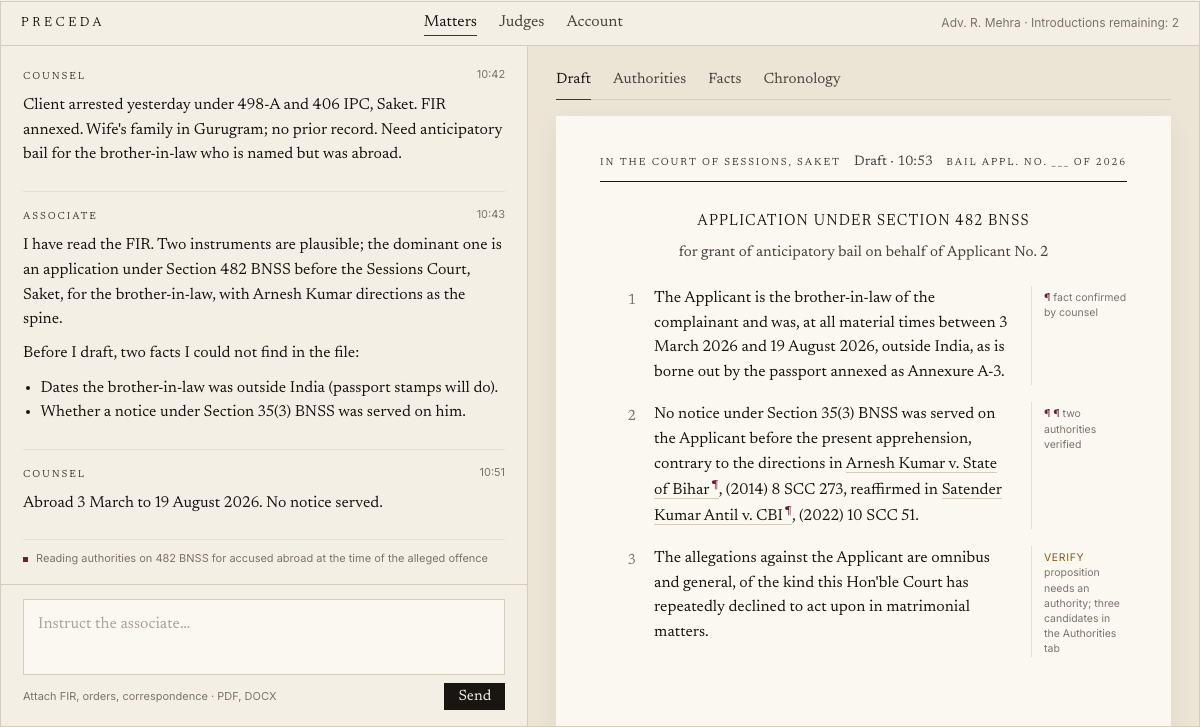
Dense, hairlines only, no ornament, no decorative motion. Everything the matter needs in view.
Mr. Bansal is a junior at a Delhi chambers. Adv. Rhea Mehra, a member, introduces him. Every screen he sees, in order.
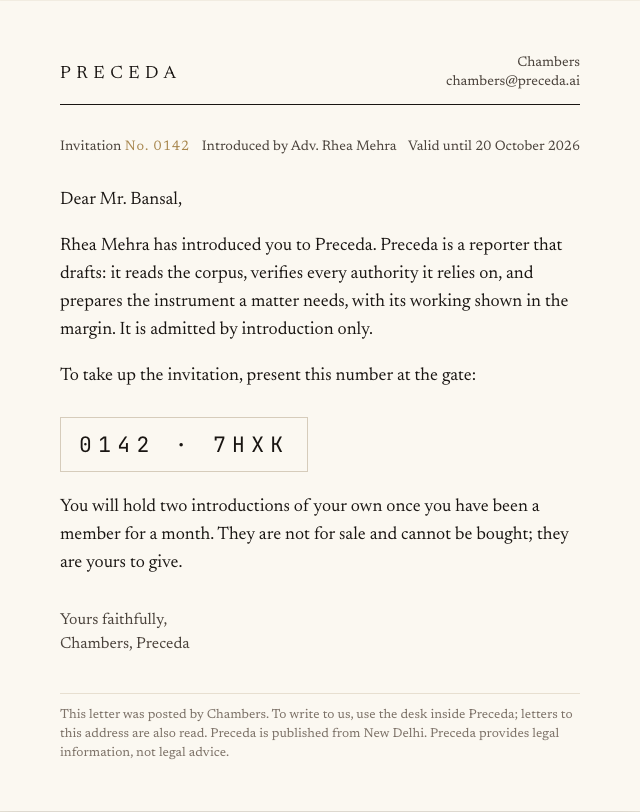
Not a "you're invited!" email. A letter from Chambers on the letterhead every Preceda email will carry, with a number in gilt and the introducer named.
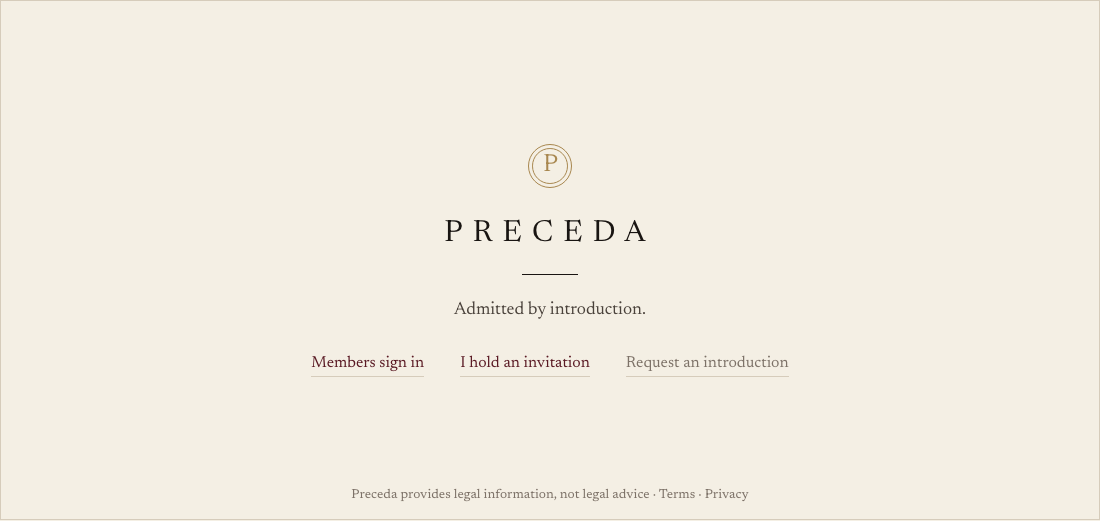
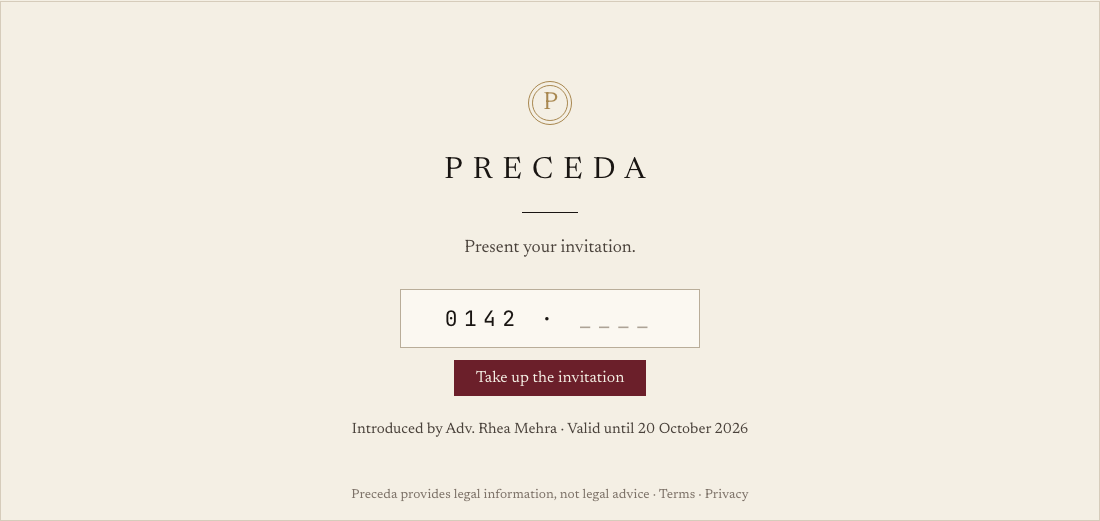
A non-member sees the masthead and three doors. Mr. Bansal presents his number; his account exists only then. Today any email gets a code and gets in.
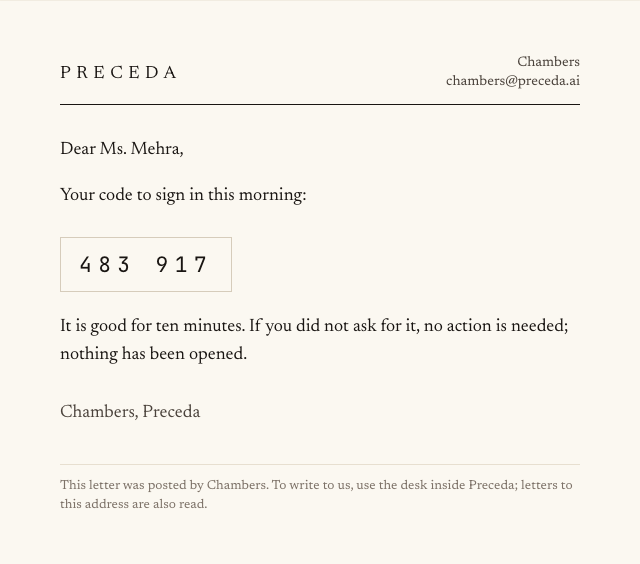
Same paper, same sender, same signature. The member never receives anything that looks like it came from a machine.
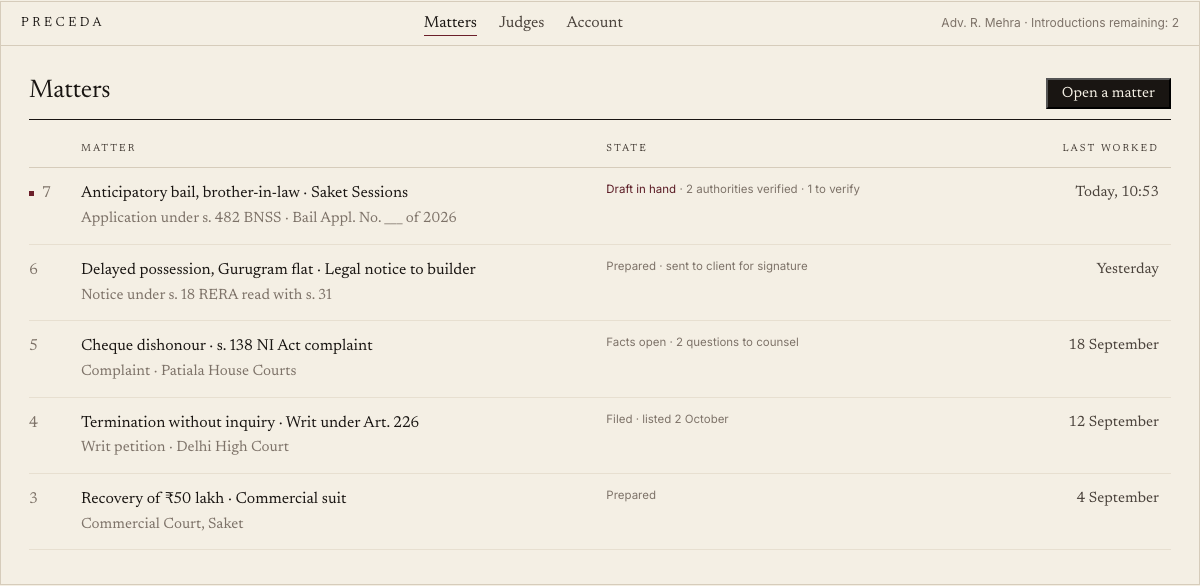
Matter number in the gutter, instrument on the second line, state in small chrome type, last worked on the right. The open matter carries the oxblood point.
Counsel states the objective; the associate resolves the instrument and asks only for what the file does not hold. No bubbles, no avatars. The turn in progress is one line of small text with an oxblood point.
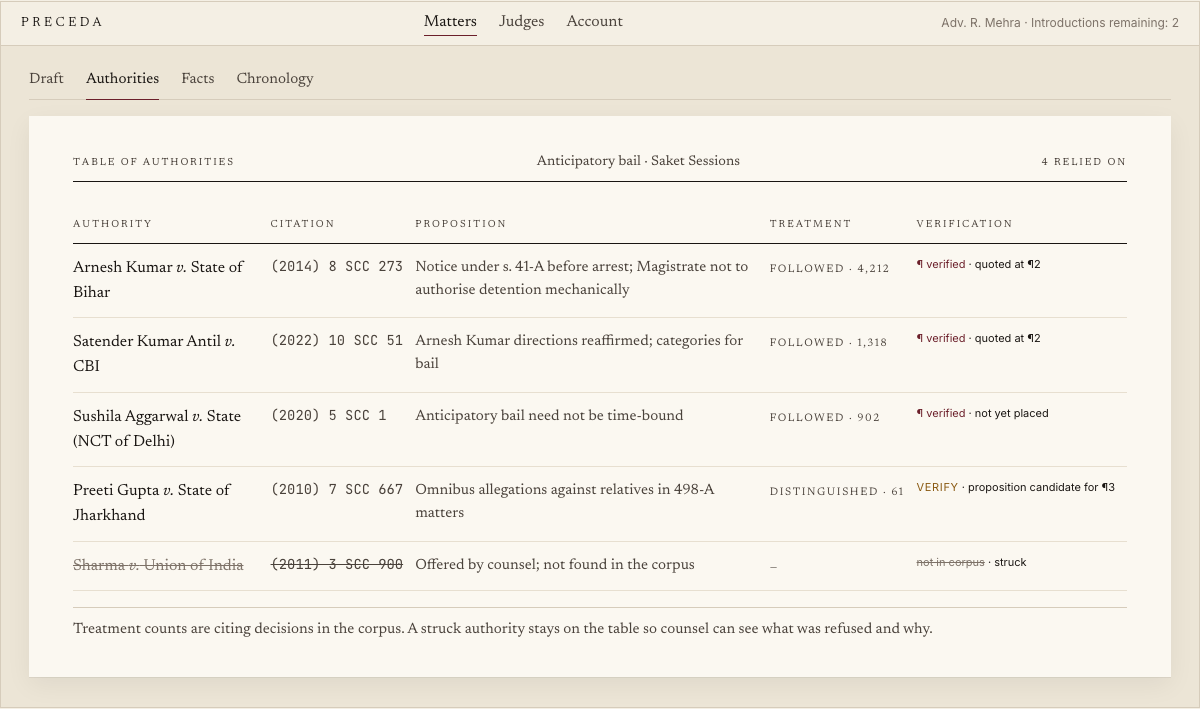
Citation in mono, proposition, treatment with the count of citing decisions, and the verification column. An authority the corpus cannot find stays on the table, struck through, so counsel sees what was refused.
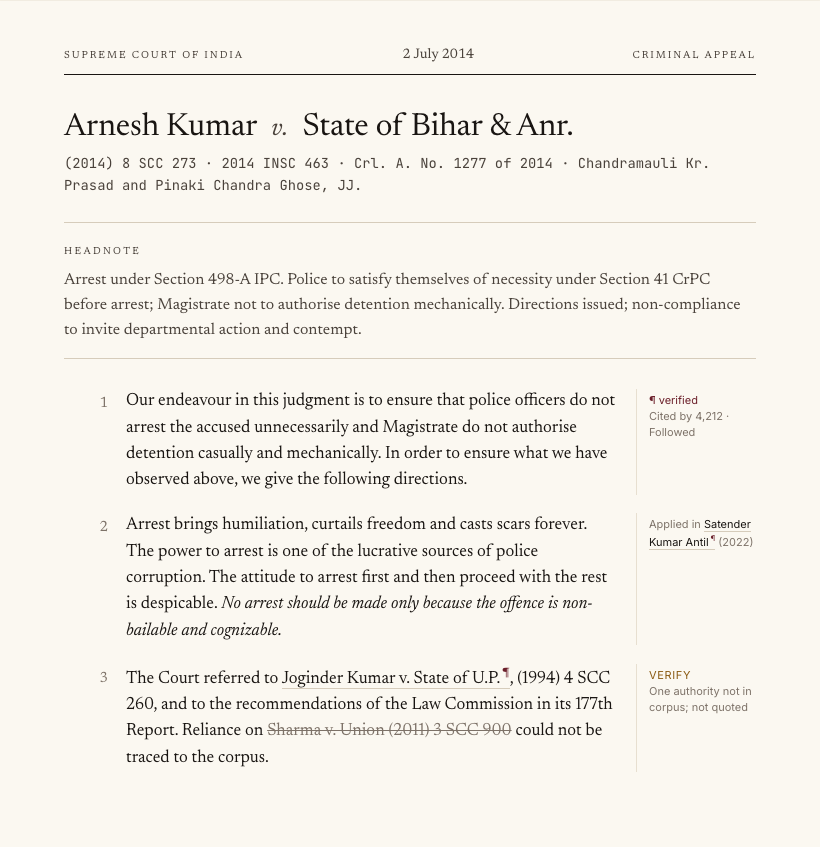
Running head, neutral citation, headnote between rules, paragraph numbers in the gutter. The margin shows what the machine did to each paragraph.
Mobile-first, not a shrunken desktop. A matter opens on the desk: running head, the draft with paragraph numbers and inline marks, tabs across the top. The dock at the bottom always shows the composer and how many questions wait; pull it up and it becomes the full correspondence with the questions answerable inline. The working line lives in the dock so a turn never blocks reading. The register is a list a thumb can scan.
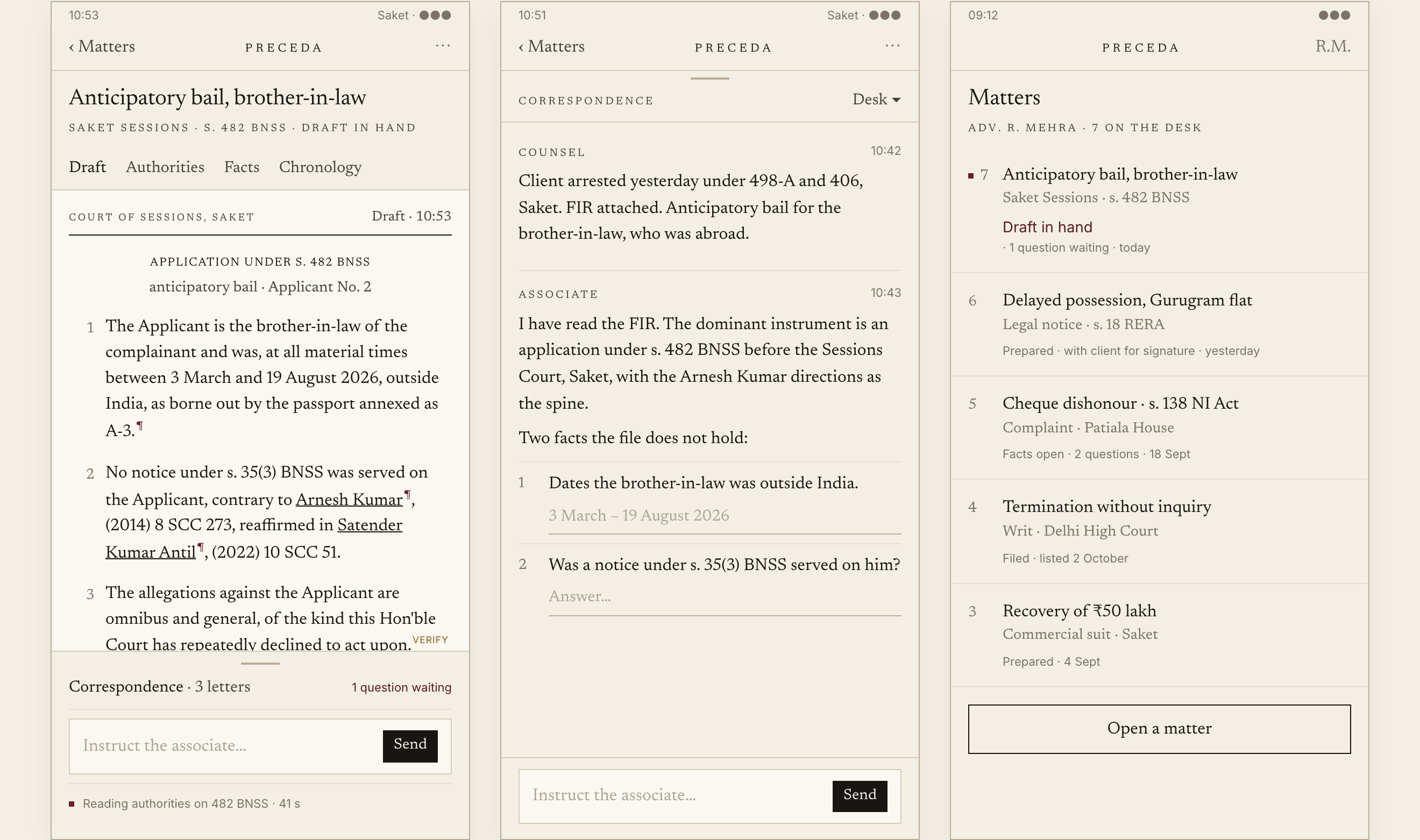
Left to right: the desk with the draft and the dock; the correspondence sheet risen with the associate's questions; the matters register. Same tokens under Lamp. Targets 44 px, body 17 px, safe areas respected, installable as a PWA with the seal.
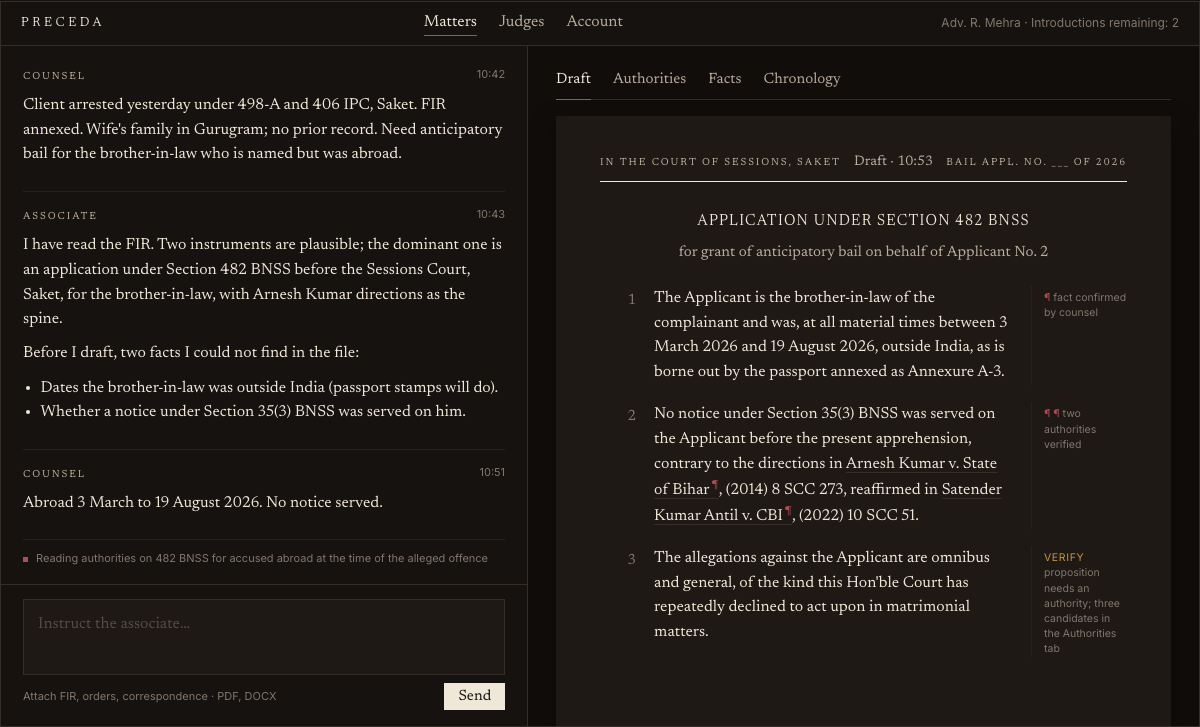
Ink paper, cream type, oxblood lifted to read under lamplight. The account lets a member switch by the hour.
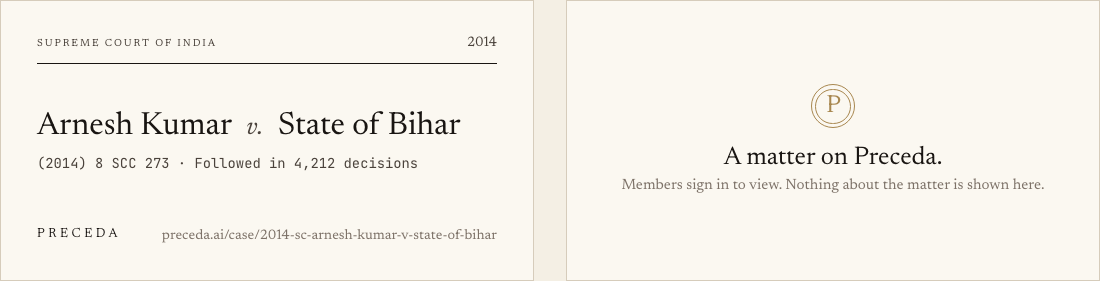
Case URLs become readable neutral-citation slugs, with anti-mining guards. Nothing about a matter ever leaks into a chat preview.
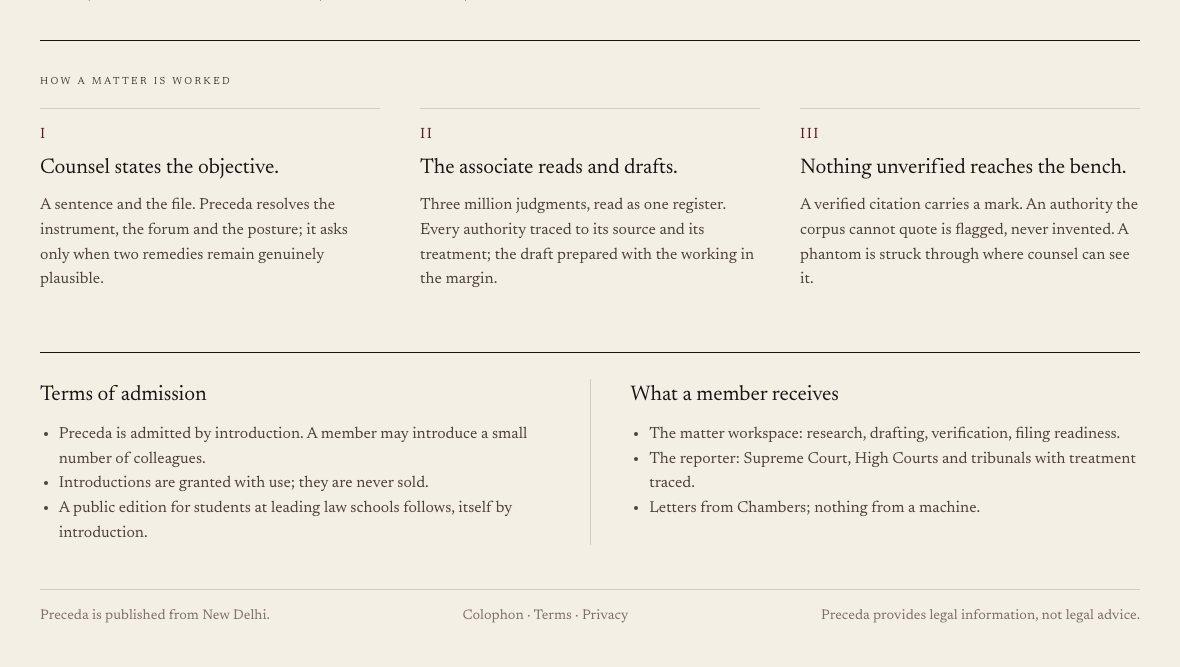
No pricing page with TBD prices. No "most popular" badge. A colophon instead of an About page.
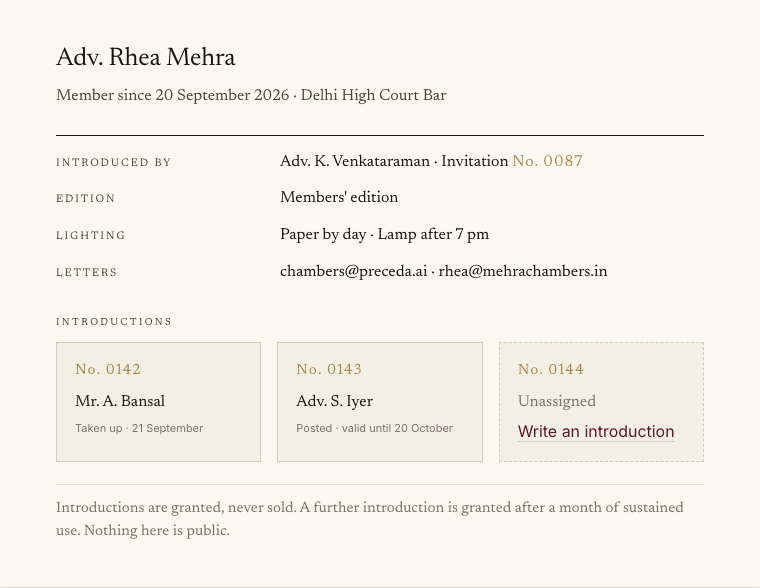
The account shows who introduced him and the introductions he holds. They are granted, never sold, and never cash, which keeps members clear of Bar Council Rule 36. Nothing here is public.
The same surfaces, current build on the left, proposal on the right.


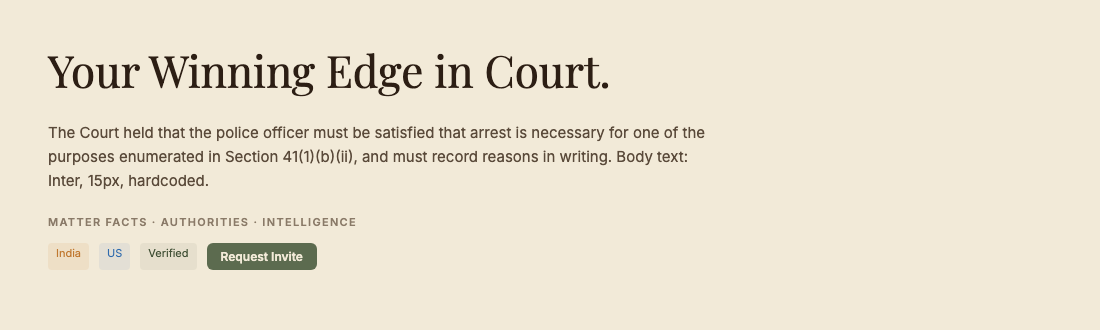
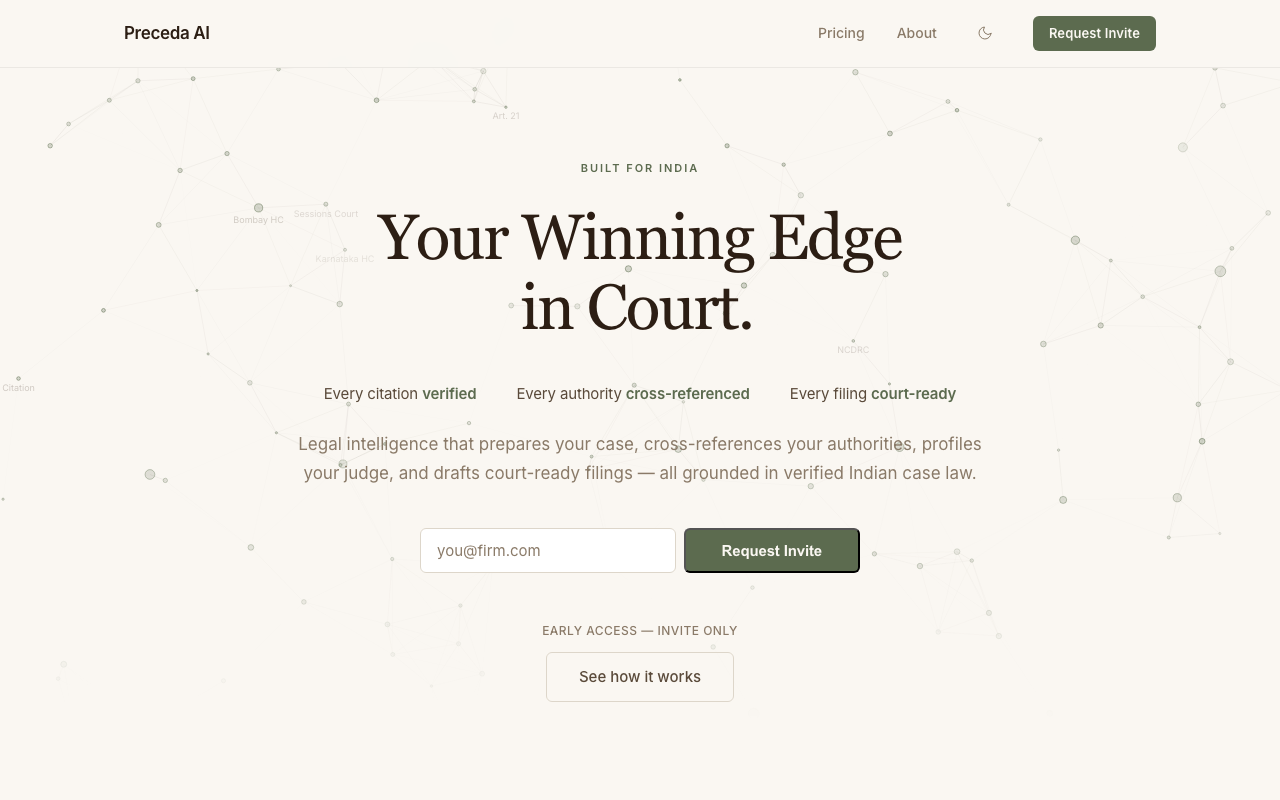
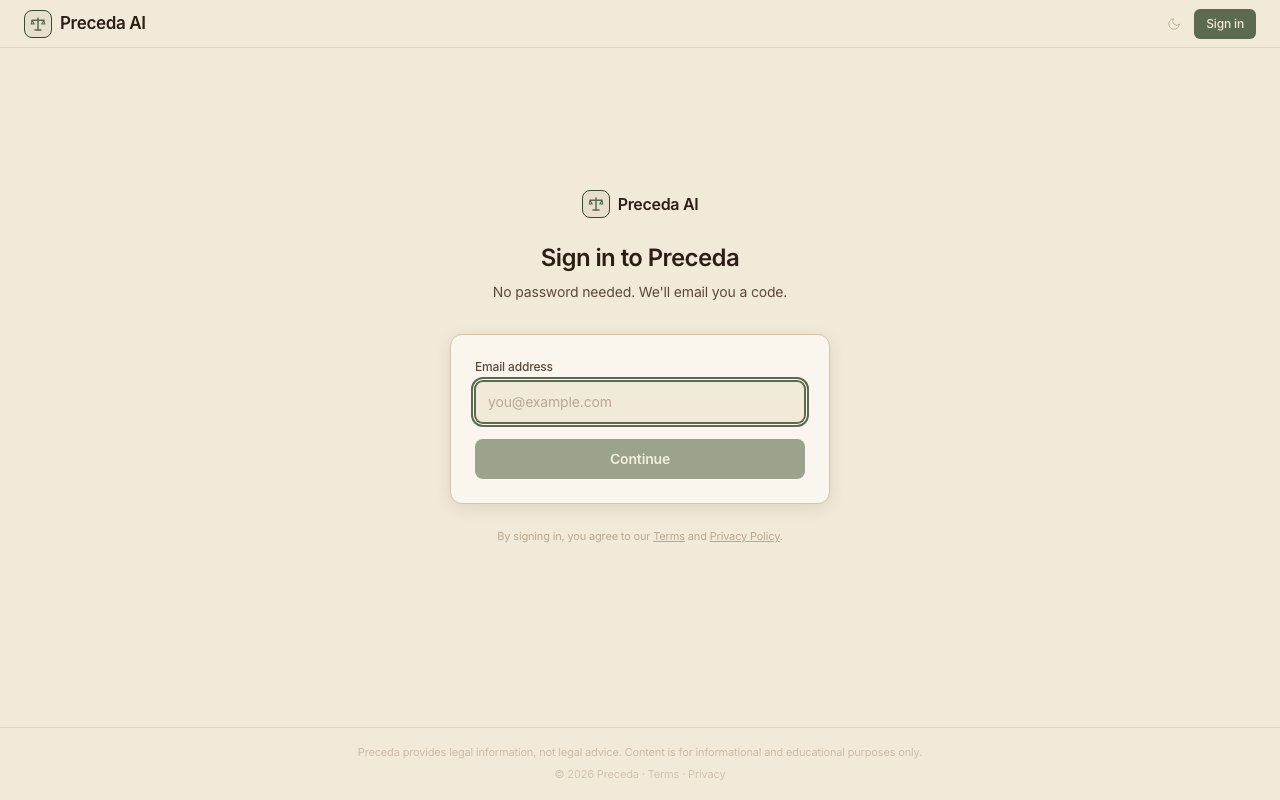
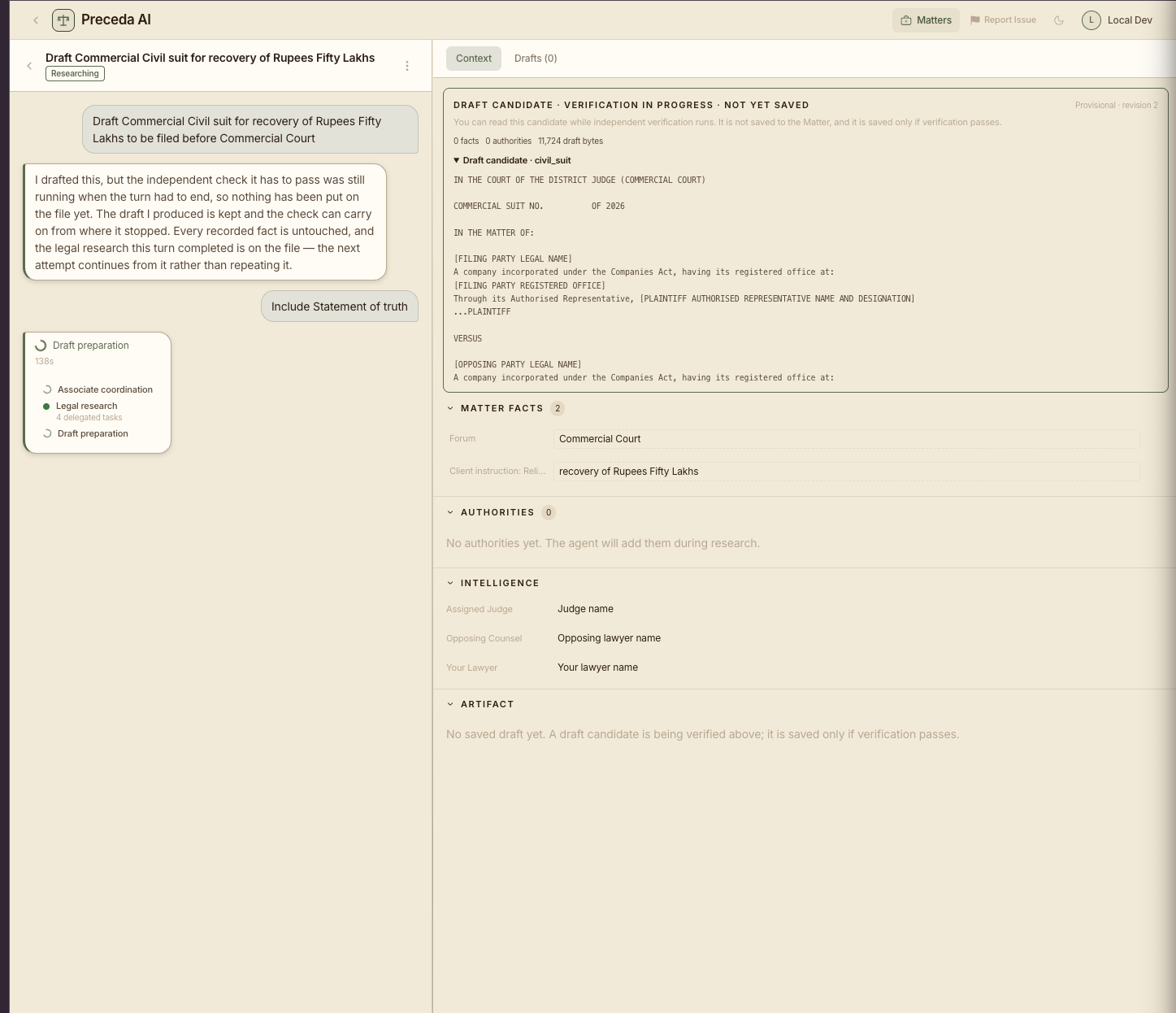
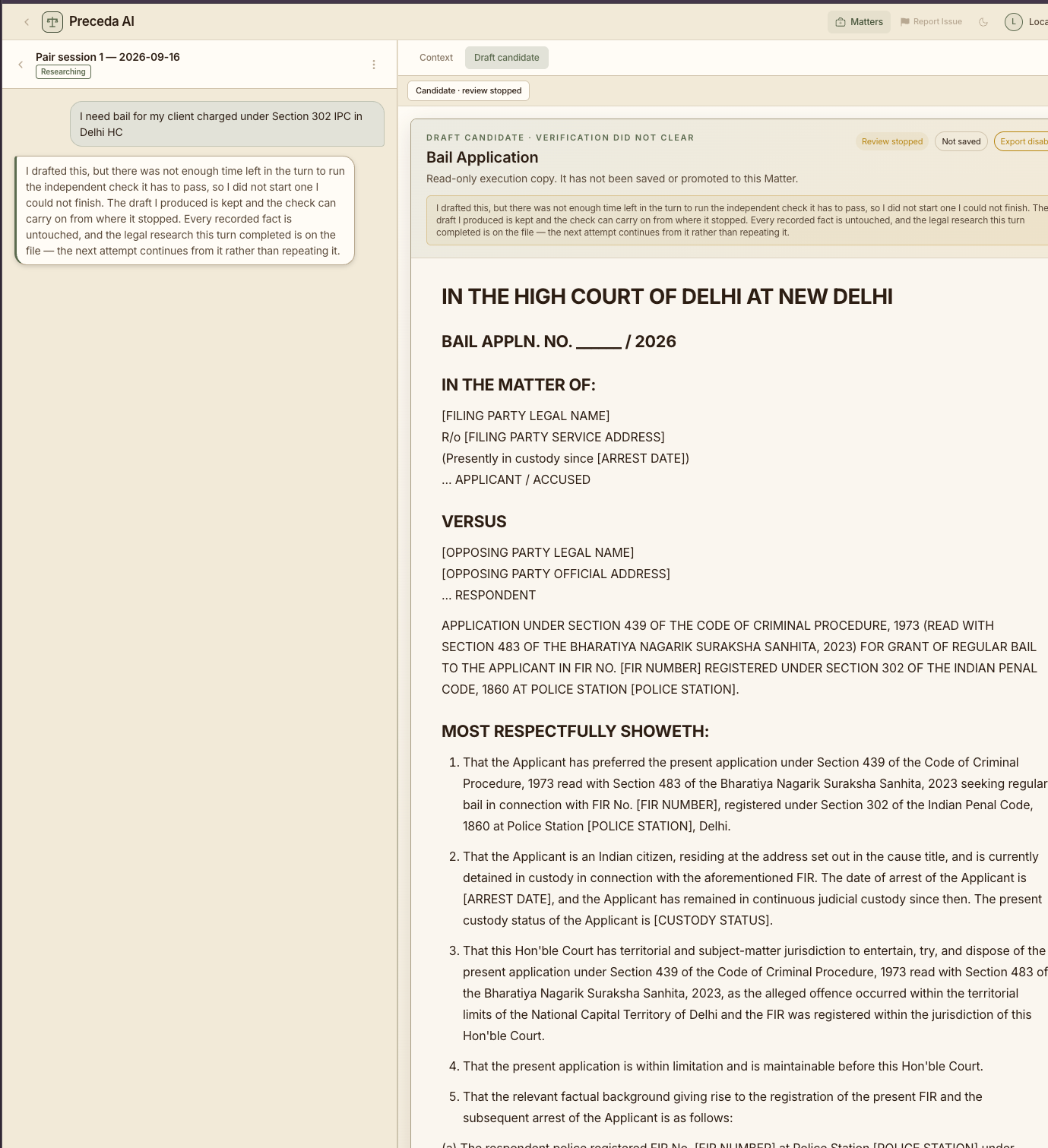
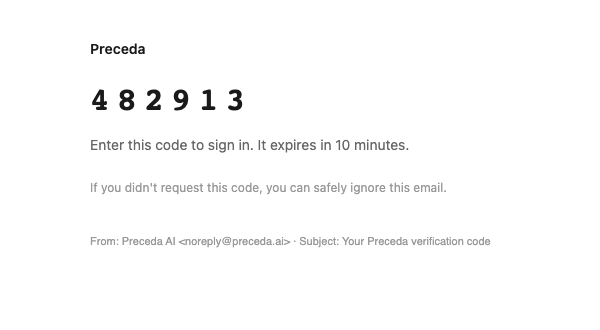
Today's workspace and draft are cropped from local-dev sessions of the current build; marketing, sign-in, email and preview are the live artefacts.
| Agreed | |
|---|---|
| Oxblood as the only accent; AIR green reserved for a public edition | agreed |
| Themes named Paper and Lamp | agreed |
| Corpus Law AI absent from product, email and previews | agreed |
| Letters sent by Chambers | agreed |
| Human-readable case URLs with anti-mining guards | agreed |
| Hindi later; the serif must have a Devanagari companion | agreed |
| For this review | |
|---|---|
| The Reporter as the design language (Parts I and II) | open |
| Serif for all reading; Newsreader versus a licensed face | open |
| PRECEDA wordmark without "AI"; the sealed monogram | open |
| Voice: retire "Your Winning Edge in Court." | open |
| Invitations as records gating sign-in; non-monetary allotments | open |
| Two editions, members' and public, both gated | open |
Full specimen with theme and typeface toggles: design.preceda.ai/specimen. Each surface ships as its own reviewable change with screenshots.
Everything in this review, set down as one system: the rules, the type, the marks and the components, in Paper and Lamp.
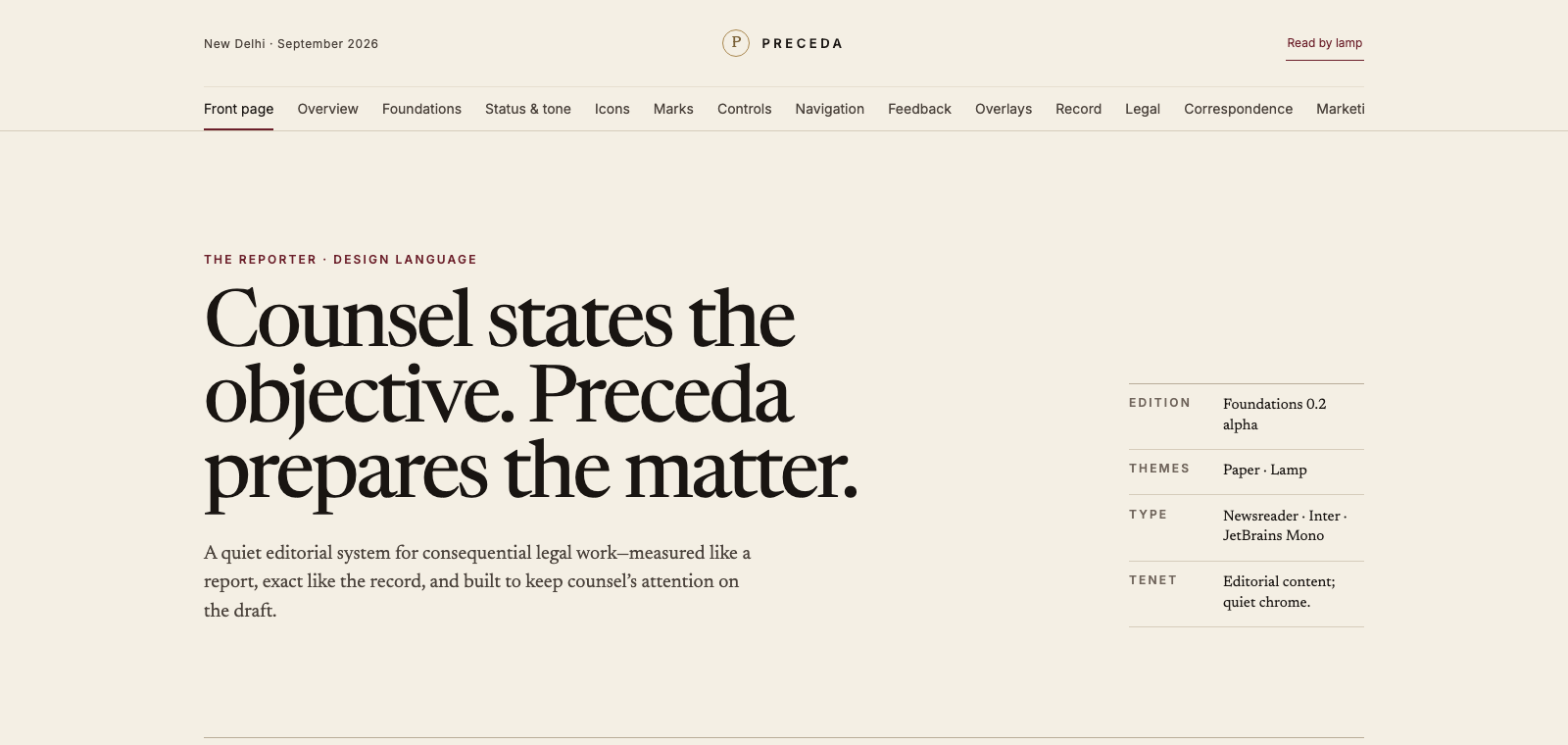
One package holds the brand as working parts: tokens, fonts, the seal and the wordmark, and the components the chambers and the journal are to be built from.
Each page sets its components in both lights, at the desk and at 390 px, with the rule behind every choice and the markup to use it.
Each page of the language carries a complete head and its own preview card: section, title and seal on Paper, drawn by the package’s renderer from the same fonts and outlines. A page without them fails the build.